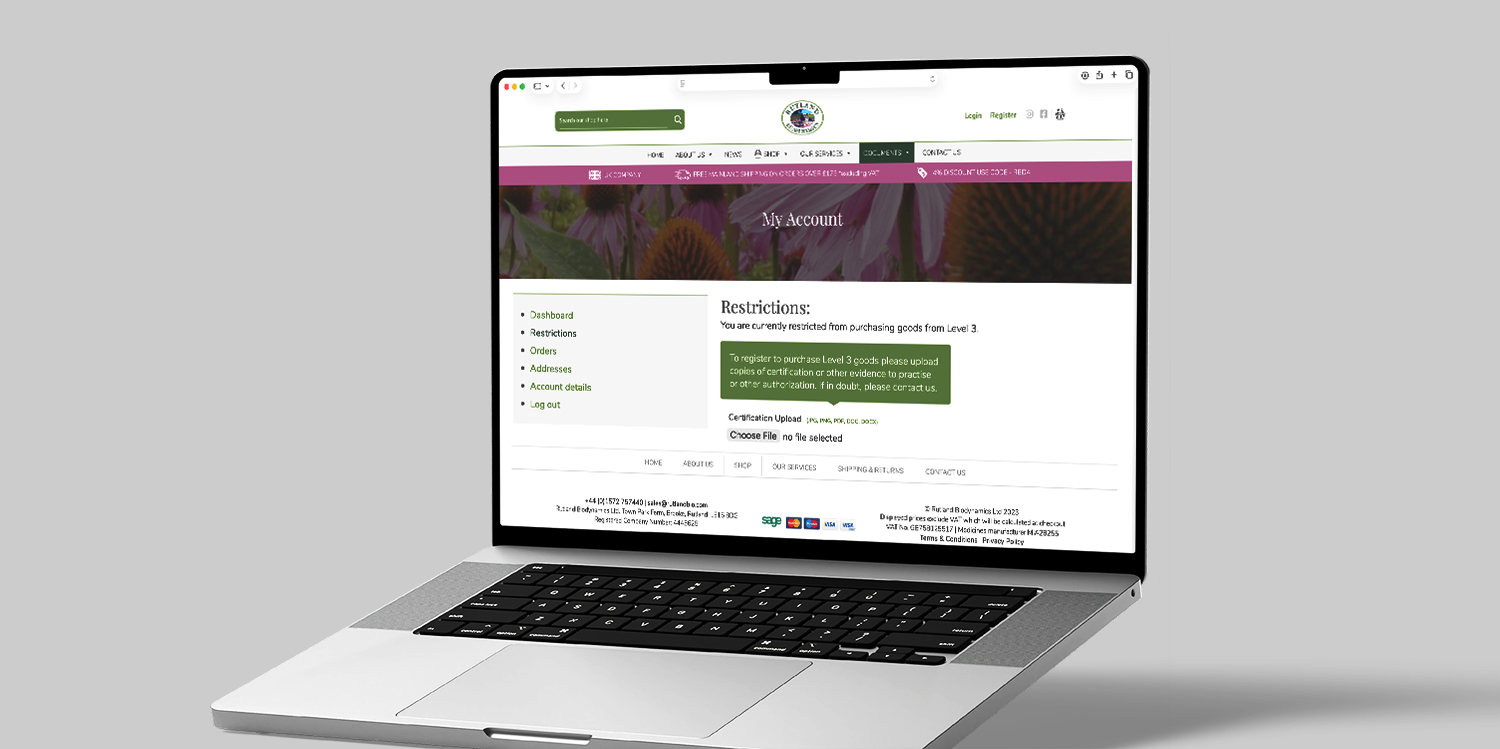
Different account privileges allowing different levels of access
STEVEN G JAMES, DIRECTOR, FEDERATION DESIGN
Ecommerce Often Needs More Than a Standard Online Shop
In regulated or practitioner-led sectors, ecommerce has to do more than take payment. It has to manage access, reflect operational reality and make technical trust visible at the point of purchase.
For some product businesses, an online shop is mainly a catalogue with a checkout attached. For others, that model breaks down quite quickly. The more specialist the product environment becomes, the more the ecommerce platform has to carry responsibilities that go well beyond design, branding or even conversion in the usual sense.
That is especially true in sectors where product access is not uniform, supporting documentation matters commercially, and stock visibility affects how confidently people can buy.
In those cases, the shop is no longer just a storefront. It becomes part of the operational logic of the business itself.
That was the challenge with Rutland Biodynamics. The brand was already established and the business already had an online shop, but the existing setup was not strong enough for the practical demands of the business. Rutland’s public-facing offer is clearly specialist: the site is positioned around products for practitioners and industry, includes a practitioner-facing shop, and surfaces trust markers such as cGMP standards, certification, research publications and regulated herbal APIs. The live site also now includes visible Login and Register routes, a broad product catalogue, and document sections for Certificate of Analysis (CoA), Material Safety Data Sheet (MSDS), Certification and Research Publications.
The issue was not only visual
On the surface, this looked like an ecommerce redesign. In practice, it was more complicated than that.
The first issue was controlled access. This was not a simple all-users-buy-the-same-products environment. Parts of the range required a more structured buying model, with different account privileges allowing different levels of product access.
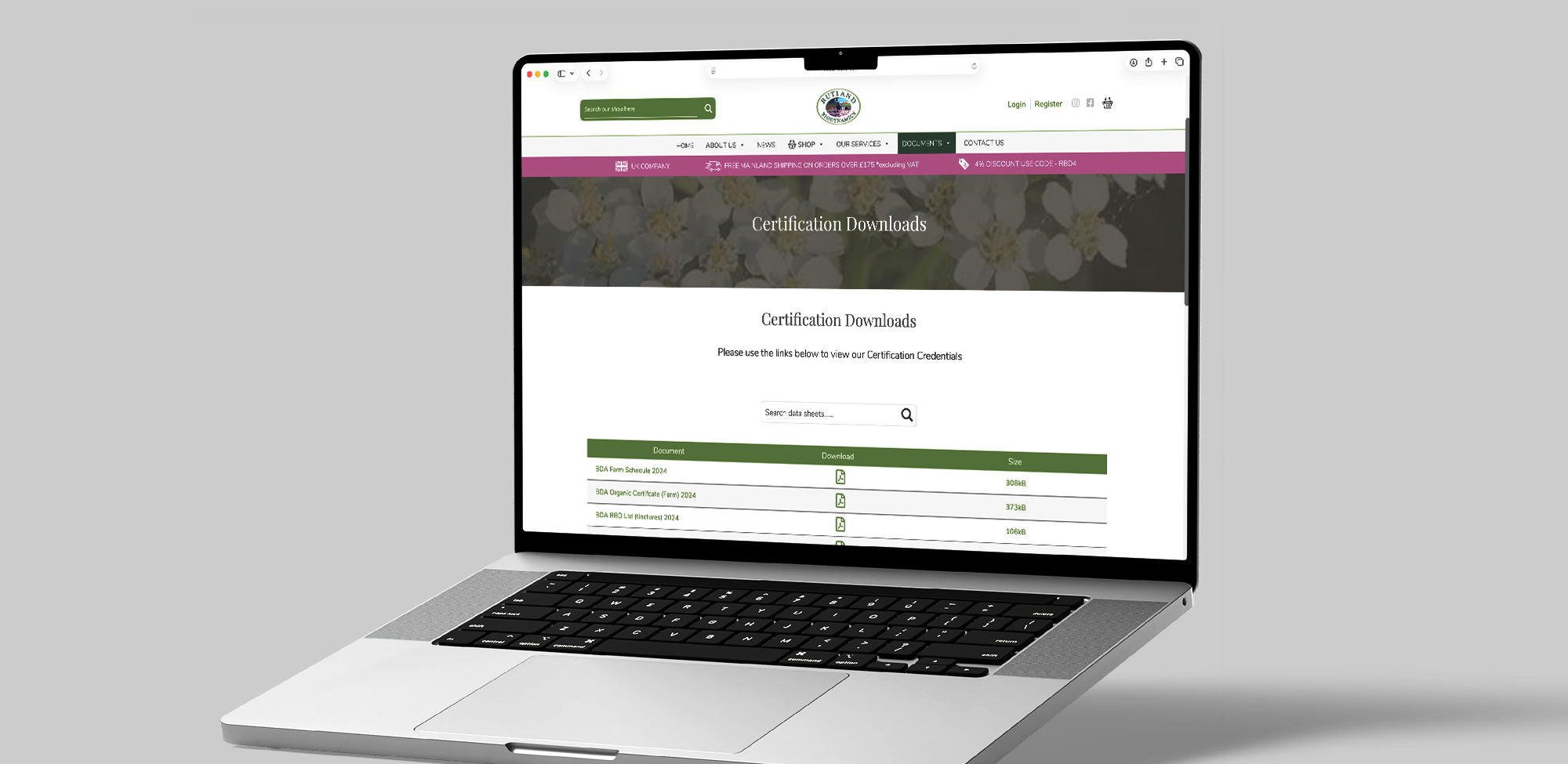
The second issue was documentation. In a specialist health-related product environment, certification and supporting paperwork are not a side detail. They are part of how confidence is created. If a business is selling products whose quality, provenance or compliance need to be evidenced, those documents need to be visible and usable within the same environment that is asking the customer to buy.
The third issue was stock awareness. The ordering process needed to reflect warehouse levels so the shop stayed aligned with operational reality rather than behaving like an isolated front end.
Taken together, those problems pointed to the same conclusion: the business did not just need a better-looking shop. It needed a more capable platform.
One platform needed to solve several different problems at once
The solution was to rebuild the ecommerce experience around the way the business actually worked.
A custom WordPress theme was created and the WooCommerce shop was rebuilt to support a more structured, role-aware customer experience. Instead of treating every buyer in the same way, the platform could support tiered access through a custom login area and user-privilege model. That made the shop better suited to a business where access to certain products needed to be controlled rather than assumed.
The same rebuild also gave the supporting documentation a more useful place in the experience.
The current site now makes room for product-related documentation and supporting files through clearly visible document sections, which is a much better fit for a practitioner-led supplier than leaving those materials scattered or disconnected from the buying journey.
The ordering process also needed to stay aware of warehouse stock, so that product availability on the website reflected the real state of the business’s fulfilment environment. That matters more than it may first appear. The most effective ecommerce platforms are not only easier to use on the surface; they also reduce the gap between what the customer sees and what the business can actually deliver.
Later, the platform was extended further with an invoicing process that allowed users to access and download invoices from within their account area. That followed the same logic as the wider build: the user account should be a useful operational space, not just a basic login.
What this kind of ecommerce actually improves
The visible result is a much more capable shop. The more important result is that one platform now supports several different layers of the business at the same time.
It supports a more realistic model of product access. It gives technical and certification material a more usable place on the site. It helps keep ordering aligned with stock awareness. And it extends the account area into something more useful after purchase as well as during it.
That kind of improvement is often more valuable than a simple redesign because it reduces friction in several places at once. The site is not only there to look credible. It is there to help the business trade in a way that reflects its actual structure.
That alignment also comes through in the live site itself. Rutland Biodynamics publicly presents itself as a specialist supplier for practitioners and industry, highlights cGMP quality and certification, and gives customers direct routes into both the shop and the supporting technical documents. Customer feedback on the site also points to the practical value of the platform, with one reviewer describing the ordering system as “a dream to use” and specifically praising the visibility of stock levels for planning ahead.
Better ecommerce is often about fit, not just features
One of the more useful lessons from projects like this is that specialist ecommerce often fails for structural reasons rather than superficial ones.
A generic shop can look acceptable and still be the wrong tool for the job if it does not understand who should be able to buy what, how supporting documentation should sit alongside products, or how stock and account data should connect to the buying process.
That was the broader value of this project. It turned an online shop into something better fitted to the actual commercial and operational shape of the business.
And that is often where custom ecommerce proves its worth; making the platform behave more like the business behind it.