Working with the Head of Marketing allowed granular Insights to lead with strategic planning
STEVEN G JAMES, DIRECTOR, FEDERATION DESIGN
How CRM Strategy Improved Lead Quality, Reporting and ROI
By combining the client’s strategic marketing direction with our technical CRM implementation, the project turned HubSpot into a more effective revenue operations platform.
Many businesses reach a point where HubSpot is being used actively, but not yet strategically. Campaigns are generating enquiries, deals are moving, teams are busy and the CRM is full of activity — but the system itself is not yet providing the visibility, control or efficiency needed to support growth with confidence. That often shows up in familiar ways: marketing spend becomes harder to attribute accurately, lower-quality leads absorb too much internal time, pipeline records become inconsistent, and reporting tells you what happened without always helping you understand why.
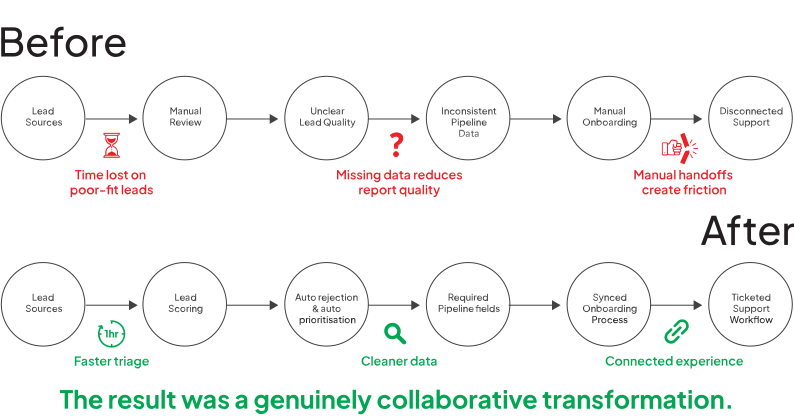
That was the shared challenge here. The business needed more than a CRM database; it needed a joined-up commercial system. Working closely with the client’s marketing manager, who brought strong strategic insight and a clear understanding of the commercial priorities, the project became a genuinely collaborative process. Their knowledge of marketing performance, lead quality and operational pain points shaped the direction, while our role was to help translate those requirements into practical CRM structure, workflows, integrations and front-end functionality.
The client brought the strategic marketing insight and commercial priorities. We translated those requirements into CRM structure, workflows, integrations and front-end functionality. The result was a genuinely collaborative transformation.
Applying RevOps thinking through partnership The work was grounded in RevOps thinking: aligning marketing, sales and operations around a shared source of truth, improving the quality of commercial data, and reducing friction across the customer lifecycle. Rather than treating HubSpot as a passive CRM, the project focused on developing it into a central logic layer for reporting, qualification, communications, service handling and connected digital experiences.
This was not a case of one side setting CRM strategy and the other simply executing tasks in isolation. The strength of the work came from the combination of strategic marketing leadership on the client side and technical implementation on ours. Established methodologies such as closed-loop reporting, lead scoring and qualification, lifecycle marketing, data governance and Growth-Driven Design helped frame decisions throughout the project, giving both sides a shared structure for deciding what to prioritise and why.
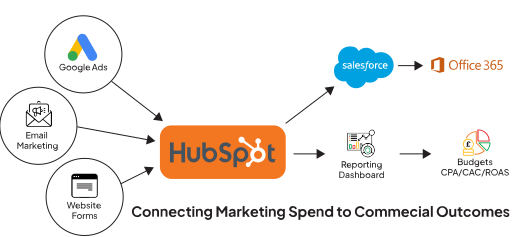
HubSpot acts as the central layer between marketing activity and commercial decision-making. Bringing together data from Google Ads, email marketing and website forms, then connecting it to reporting tools & wider business systems, the setup gives the client a clearer view of campaign performance, lead quality and return on marketing spend.
Better attribution, better focus One of the first shared priorities was the development of a more granular reporting model. Attribution of marketing spend was critical, because without it even strong campaign activity can be difficult to assess properly. By improving reporting structure, the business gained clearer visibility into what each channel was contributing, allowing performance to be evaluated more meaningfully against cost, lead quality and conversion outcomes.
This was supported by the integration of Google Ads and a Salesforce connection, helping data move more effectively between systems and giving leadership a stronger basis for decision-making around CPA, CAC and ROAS. In practical terms, the result was a clearer understanding of which activity was driving high-quality leads, which channels were generating volume without enough value, and where budget could be reallocated for stronger commercial return.
Improving lead quality and operational efficiency Lead handling was another major area of focus. Before the updated setup, the team was spending too much time on poor-fit enquiries. Working from the client’s understanding of the real pressure points inside the business, we helped implement a more structured lead scoring model so that stronger opportunities could be prioritised more effectively. That was reinforced by low-quality lead auto-rejection communications, reducing manual handling and helping weaker enquiries exit the process earlier.
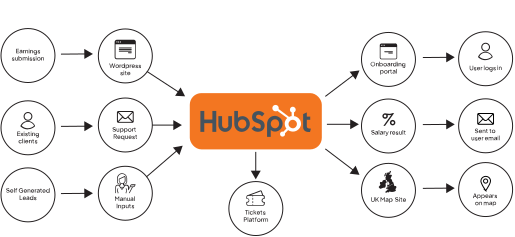
This diagram shows how HubSpot was used as the central system connecting multiple inputs, workflows and outputs. By bringing together data from the website, support requests and manual lead sources, the platform could then power connected processes such as onboarding, ticketing, salary emails and map-based outputs.
The same collaborative approach shaped the pipeline itself. Deal automation was introduced to prevent records progressing unless key information had been captured, such as operational details like interview dates. Auto-created tasks supported reminders and follow-up activity, reducing reliance on memory and helping improve consistency. These changes may appear tactical in isolation, but together they had a meaningful impact on pipeline reliability, forecasting quality and internal efficiency.
A connected CRM ecosystem Beyond lead handling and reporting, the project also focused on making HubSpot more useful across the wider customer and operational journey. Outbound email communications to active client data, SMS messaging for third-party system notifications, and tickets created from emails all helped create a more connected lifecycle experience.
At the same time, HubSpot was integrated more directly with the wider digital ecosystem, including a custom WordPress platform, a fully synced client onboarding portal, and automations that pushed data parcels into front-end experiences such as geographic UK map pins.
On the marketing side, dynamic job page generation and a salary calculator built using HubSpot’s calculation property helped extend CRM logic into the website experience itself. Animated banner adverts for retargeting further supported campaign activity by helping maintain brand visibility and reinforce assisted conversion. Here again, the value came from partnership: the client understood what the business and its audience needed, while we focused on turning that into workable technical delivery.
The less visible work that made the platform stronger Some of the most valuable outcomes came from the less visible parts of the build. Effective HubSpot implementation often relies on knowing where the platform needs additional logic to support meaningful reporting and segmentation. For example, where time-based reporting required a relative date reference, a custom date property was created and populated via workflow so that metrics could be tracked more reliably. A custom contact type property was also introduced to distinguish between leads, clients, suppliers and internal contacts, supported by workflows that identified supplier contacts automatically from email domains.
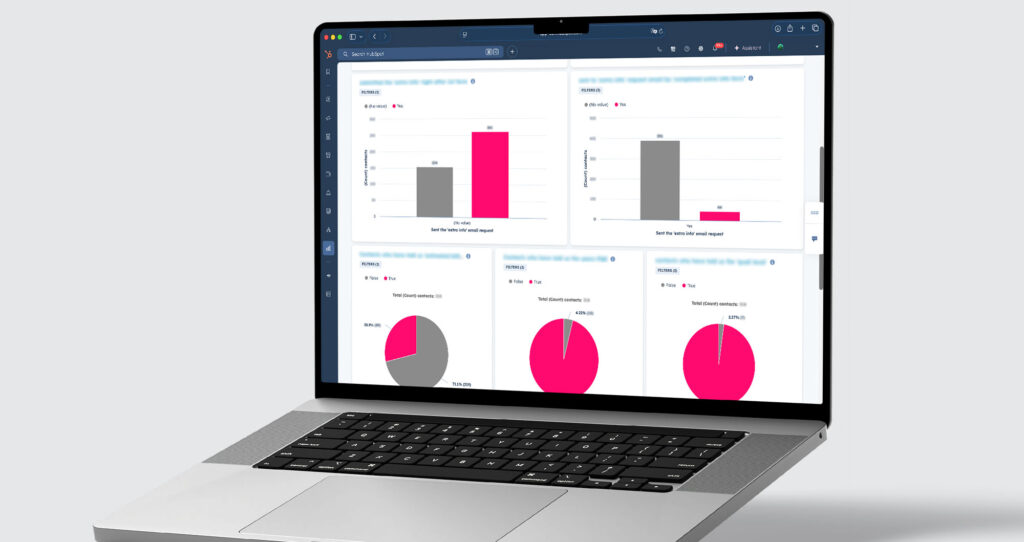
By linking acquisition data to CRM outcomes, granular dashboards made marketing performance measurable in commercial terms — because what gets measured gets improved.
A GDPR-led data retention model added another important layer, allowing lead data to be automatically redacted after a defined period based on the level of engagement shown by the contact. This improved database hygiene, reduced compliance risk and ensured the CRM handled data more responsibly over time. These kinds of measures are rarely the most visible part of a project, but they are often what make the difference between a CRM that is busy and a CRM that is genuinely mature.
The result of a focused collaboration Taken together, these changes transformed HubSpot from a useful CRM into a much more strategic commercial platform. Better attribution improved confidence in spend decisions. Lead scoring and auto-rejection protected team capacity. Pipeline controls improved data quality and consistency. Connected workflows reduced manual admin. Dynamic front-end features improved usability and conversion. And carefully designed workarounds made reporting, segmentation and compliance significantly more robust.
Most importantly, the outcome reflects the strength of a focused partnership. The client brought the ambition, marketing knowledge and commercial clarity to define what the system needed to achieve. We brought the technical delivery, CRM strategy architecture and implementation expertise needed to make that vision operational. The result was not simply more automation, but a more mature, RevOps-led environment built through collaboration between two motivated parties working toward the same goal.