Buyer Personas, understanding of who the customer is
STEVEN G JAMES, DIRECTOR, FEDERATION DESIGN
Building Buying Personas to Create More Relevant Customer Communication
When a business speaks to every customer in the same way, it can miss the differences that drive trust, relevance and conversion. The most effective communication strategies are usually built on a clearer understanding of who the customer is and what matters most to them.
Our client wanted to improve how they communicated with customers and create a more tailored experience across different audience types.
Although the business already had an established client base, its communications were still relatively broad in approach. Different types of customers were often receiving the same style of messaging, even though they had different priorities, concerns and expectations.
Through discussion and analysis, it became clear that the client’s customer base consistently fell into several distinct categories. While all of these customers were valuable, they did not think, buy or engage in the same way.
That created a clear communication challenge.
Without a more structured understanding of these buyer types, the business risked relying on messaging that was too general to resonate fully. Differences in customer needs, likely objections, key questions and decision-making drivers were being overlooked because there was no formal Buying Personas framework in place. The client needed a clearer way to segment their audience so communication could become more relevant, more intentional and better aligned with the needs of each type of buyer.
While all of these customers were valuable, they did not think, buy, or engage in the same way.
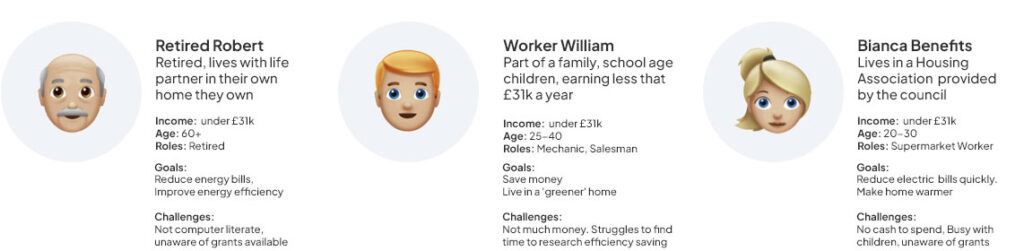
Working from patterns already visible in the client’s customer base, we helped develop a set of buying personas that gave the business a clearer structure for understanding who it was speaking to.
Rather than creating theoretical audience profiles from scratch, the personas were built from the customer types that had already emerged within the existing client list. From there, each of the Buying Personas was developed to reflect the characteristics that mattered most, including likely needs, common challenges, the kinds of questions each group was likely to ask, and the priorities or concerns that could shape how they engaged with the business.
This gave the client a more practical framework for segmentation and a stronger basis for shaping communication around real customer differences.
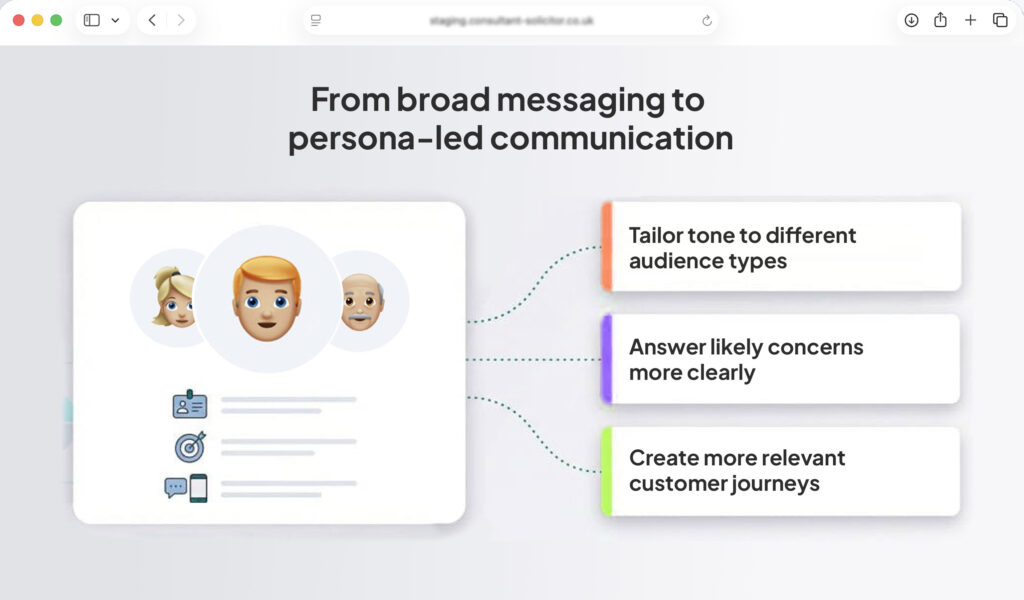
Once the Buying Personas had been established, each segment was supported with tailored communications designed around its specific behaviours and priorities. This did not stop at high-level messaging. It also shaped the language, tone and structure used in email communication, helping the client speak to each audience group in a way that felt more relevant, more deliberate and more closely matched to their individual needs.
The result was a more segmented and customer-aware communication strategy.
By introducing buying personas, the client gained a clearer framework for understanding the different types of customers they were serving and the differences between them. That allowed the business to move away from broad, one-size-fits-all messaging and towards a more tailored approach built around real variation across the customer base.
With communications adjusted to reflect each segment more accurately, the client was better positioned to address individual needs, answer likely questions more effectively and create a more relevant experience throughout the customer journey.
What had previously been a more generalised approach became a more strategic and audience-led communication model — helping the client engage different buyer types with greater clarity, relevance and precision.