Working with open API's to deliver connected solutions
STEVEN G JAMES, DIRECTOR, FEDERATION DESIGN
How HubSpot, Automation and Segmentation Helped powerfully energise Qualification and Delivery using API integration
Many CRM projects focus on visibility, pipeline structure or campaign reporting, but in some cases the real challenge sits deeper in the operational journey. This was one of those cases. The client needed more than a system for storing enquiries; they needed a process that could take a new lead, assess eligibility quickly, move the right people into qualification, filter out unsuitable applicants early and reduce manual handling at every stage possible. The objective was not simply to make the team busier with better tools, but to make the process itself more intelligent, more scalable and more consistent.
By combining the client’s sector knowledge with CRM architecture, API-led automation and audience-specific communications, the project turned HubSpot into a more connected qualification and delivery engine.
That made the project a genuine partnership. The client brought a strong understanding of the sector, the practical realities of qualification and the customer journey that applicants needed to move through. Our role was to translate that into a working HubSpot model: a system of properties, workflows, integrations, portals and communications that could support both operational efficiency and a better applicant experience. The result was a build shaped by two focused parties — one defining the commercial and process requirements, the other designing the CRM logic and technical delivery needed to make them work.
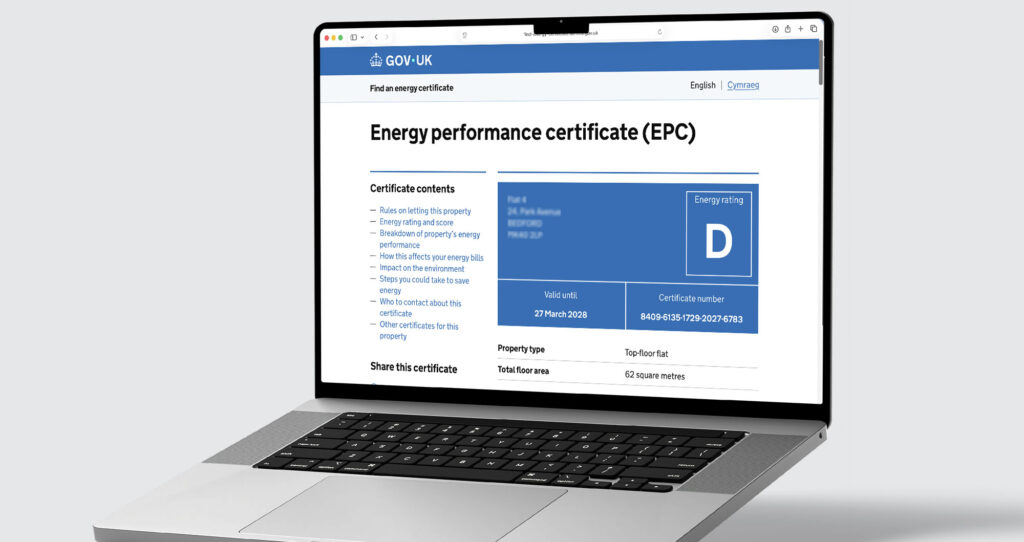
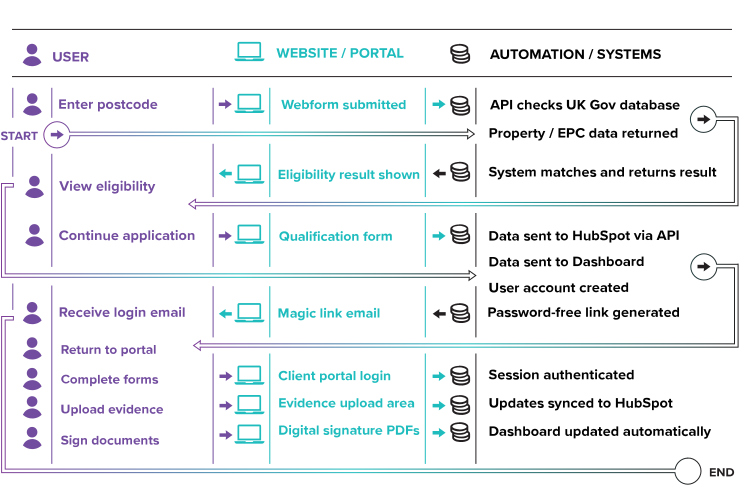
Starting with the right data One of the most powerful elements of the build was the API integration connector to the government EPC database. When a postcode is submitted, the system automatically retrieves EPC data for the relevant property and inserts that information directly into the HubSpot contact record. That data then becomes the trigger for the next stage of automation.
This mattered because it removed the need for internal teams to carry out the same checks manually for every enquiry. It also meant the CRM could begin qualifying contacts based on live property data rather than waiting for someone to interpret it later. In practical terms, properties with an EPC rating of C or above are automatically identified as not applicable, moved to closed lost, and sent a rejection email without any manual involvement. That one rule alone removes a large amount of avoidable admin and ensures unsuitable leads are filtered out early and consistently.
Working closely with the client, we translated strategic marketing priorities into a connected CRM journey, combining HubSpot, API integrations and front-end tools to reduce manual handling and improve progression through the process.
Automating progression, but only where it makes sense For contacts that do meet the initial criteria, the process continues automatically. Data is pushed into a web application we built called the client dashboard, where an account is created and a verification email is sent without manual intervention. The applicant can then log in, verify their account and begin the next stage of qualification. Inside that dashboard, users complete questions about themselves and their household, then upload the supporting evidence needed to progress — for example utility bills and proof of identification. This creates a much more structured qualification environment than relying on back-and-forth emails or disconnected document requests. Contacts that are not suitable can be rejected automatically and moved out of the pipeline, while successful applicants continue through the journey in a more controlled way.
An important part of the logic was deciding where automation should end and human action should begin. Rather than forcing everything into a fully automated model, tasks are triggered at the points where manual involvement is genuinely needed and action should be taken. That meant the system could handle the repetitive and rules-based parts of the process, while still prompting the team when a human decision, review or intervention was required. Once evidence is verified, the next operational step can be triggered, including the automatic assignment of an installer.
That balance is important. Good CRM automation is not about removing people from the process entirely; it is about making sure people spend their time where their judgement adds value, rather than on repetitive administration.
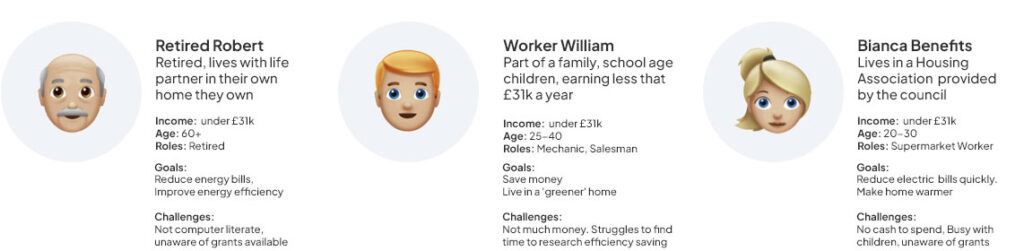
To make communication more relevant and usable, we developed buyer personas that helped shape messaging around the needs, confidence levels and circumstances of different audience groups.
Using segmentation to improve communication quality One of the most important strategic elements of the project was the development of buyer personas within HubSpot. While automation reduced manual handling and improved process efficiency, persona-led segmentation helped make the journey feel more relevant, usable and effective for the people moving through it. That distinction matters, because even a well-structured process can still create friction if the language feels too generic, too technical or simply out of step with the audience.
Buyer personas help move communication beyond broad assumptions and towards a more informed understanding of the user’s goals, pain points and likely barriers. Rather than relying on demographics alone, the persona model gave the client a clearer framework for shaping tone, wording and levels of instruction around real behaviour and decision-making. In practical terms, that meant communications could be better matched to the needs of different audience groups, rather than forcing every user through the same style of journey.
For some applicants, being asked to verify an account, log in to a dashboard or upload supporting evidence from a phone feels straightforward. For others, especially older users or those with lower digital confidence, that same language can quickly become a barrier. By building personas into the CRM structure, communications could be adapted to feel more appropriate to the person receiving them, making the process easier to follow, less intimidating and more likely to be completed successfully.
This is where CRM strategy overlaps with strong lifecycle marketing. It is not just about sending the right message at the right time, but making sure it feels right for the person reading it. Persona-based segmentation helped the client communicate more naturally, reduce friction and create a better user experience, while also supporting more focused marketing and a stronger overall journey.
Strengthening the infrastructure behind the CRM Another important layer of the project was the setup and integration of Microsoft 365. The client’s previous email environment was not connecting reliably with HubSpot, which created limitations around email channel setup and wider communication workflows. To resolve that, we migrated MX records and associated mailboxes into Microsoft 365 and configured the environment to support the CRM properly.
Although this is less visible than a portal or automation workflow, it had a significant effect on the reliability of the wider system. CRM performance does not depend only on forms and dashboards; it also relies on whether the underlying communication infrastructure is robust enough to support what the business needs. In this case, improving the email environment helped create a more dependable foundation for the rest of the HubSpot setup.
A more intelligent qualification and delivery model Taken together, the project created a much more connected system for qualification, communication and progression. EPC data could be pulled in automatically. Unsuitable properties could be filtered out instantly. Dashboard accounts could be created without manual input. Applicants could submit information and evidence in a structured way. Tasks could be triggered only when human action was needed. And suitable applicants could continue through to installer assignment with far less administrative friction.
The result is not simply a more automated CRM. It is a more mature operational model built around the reality of the client’s process. The client brought the strategic clarity to define what the journey needed to achieve, and we helped turn that into a working HubSpot ecosystem that could support qualification, segmentation, communication and delivery in a far more efficient way. The outcome is a process that is easier for the team to manage, easier for applicants to move through, and better aligned with the practical demands of growth.